
Energy and Climate Change | Government presents package of measures to speed up power and grid expansion
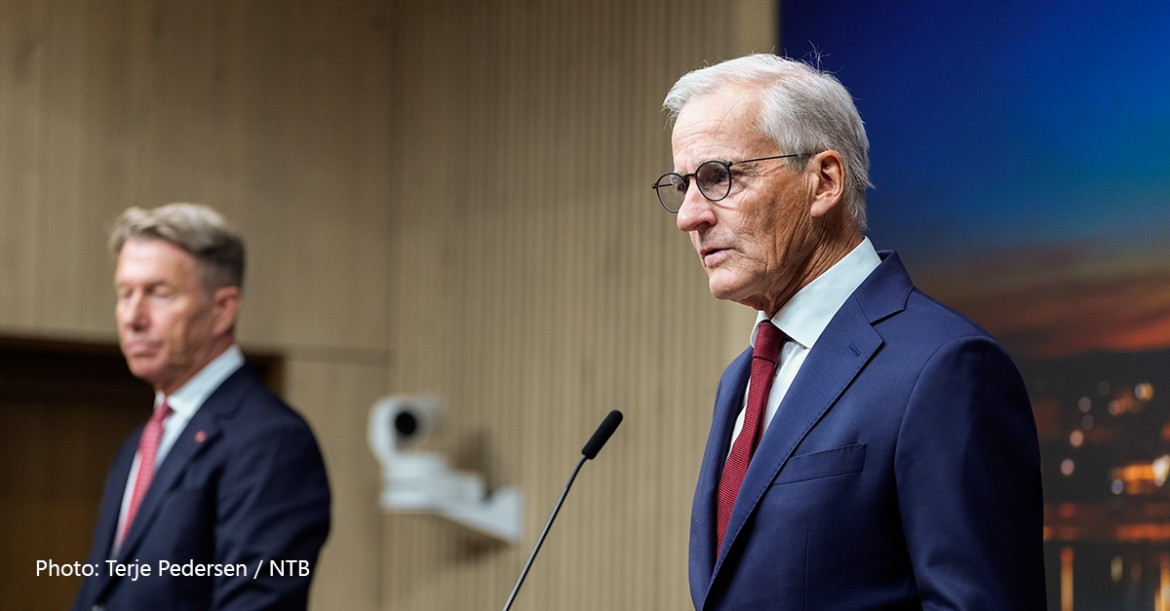
The Government’s rationale is that demand for power and grid capacity has increased sharply in recent years without a corresponding increase in the pace of build-out. In several parts of the country, it is currently difficult to expand or establish new business activity, or to make green investments, because the grid lacks available capacity. The package is intended to simplify regulation and cut administrative burden across the licensing chain for both grid and power projects, while stating that key societal considerations – nature, the environment, local involvement and the rights of indigenous people – will continue to be safeguarded.
The measures are of key relevance to grid companies (including Statnett and distribution system operators), power producers (in particular onshore wind developers), industrial power users and data centre operators, host municipalities and counties, and other businesses and public bodies that depend on timely and predictable access to the Norwegian grid.
Bakground
Norway’s grid infrastructure has been under considerable strain for some time. When the Norwegian Power Grid Commission (ad hoc) presented its report on the development of the Norwegian grid in 2022 (NOU 2022:6 Nett i tide), the Commission estimated that it can take up to 14 years to plan, process and construct the largest power lines in the transmission grid. The Government’s stated aim with today’s package is to halve the time it takes to build out electricity transmission and regional grid compared with the position when the Government took office in 2021.
Separately, and forming part of the wider political backdrop against which the Government’s package should be seen, the Norwegian Parliament (Stortinget) has in recent months considered several private member proposals from opposition parties addressing, among other things, grid licensing timelines, grid connection queue management, the grid income regulation, grid company structure, security-of-supply considerations and the treatment of large power consumers such as data centres.
The Government’s key measures
Below is an overview of the measures BAHR considers important following today’s press conference.
Shorter, Firmer Deadlines for Licensing Decisions
The Government has set an ambition to halve the processing and construction time for grid projects, through cuts to administrative process and simplified regulation. The package includes a statutory two-year deadline for NVE’s licensing processing of both grid cases and new power production, running from receipt of a complete application. Statnett and NVE will also be instructed to prioritise the projects of greatest importance to the power system, with regular progress reporting. The criteria for determining project priority were not specified, though measures safeguarding power flow and power production were indicated as potentially relevant considerations, without further elaboration
Fewer State Objection Rights, More State Support to Municipalities
The Government is starting legislative work to remove the right to object (innsigelsesrett) of the County Governor (Statsforvalteren) and other state authorities in hydropower, wind power, and grid licensing cases. The Sámi Parliament’s (Sametinget) right to object is maintained. Pending the new rules, the County Governor is instructed to apply a high threshold before raising an objection, and is separately tasked with a supportive role in helping municipalities and counties facilitate new power and grid development.
Removal of the Municipal Zoning Plan Requirement for Onshore Wind
The requirement for a municipal zoning plan (reguleringsplan) for onshore wind is removed, while existing requirements for a proper licensing process through NVE – including consideration of Sámi interests, nature and the environment – are maintained.
A Statutory Municipal Consent Right for Onshore Wind
Onshore wind is highlighted by the Government as a cost-effective technology that can quickly add power production, but where current processes are often lengthy and conflict-prone. The package introduces a statutory right for municipalities to consent to, or refuse, onshore wind power development in their own municipality, set out in dedicated legislation outside the Planning and Building Act, with municipal consent required before NVE issues a licensing decision. The exact point in the process at which consent must be given will be settled through legislative work and public consultation, which the Government aims to complete during the spring 2027 parliamentary session.
Earlier Municipal Revenues from Wind Power
Host municipalities will receive revenues from wind power earlier than today, with the State bringing forward payment of part of the production tax (produksjonsavgift) to municipalities, from the start of construction rather than from the start of operation. Further details are expected in the 2027 State Budget.
Lighter Assessment and Documentation Requirements
The Government highlighted that impact assessment requirements are being simplified, including the possibility to remove the requirement altogether for certain urgent, societally critical projects, while at the same time maintaining the requirements for a proper licensing process for wind power, and that considerations relating to nature and the environment, and Sámi interests, shall continue to be an important part of the assessments. No further information was provided on the specific requirements that will apply.
Grid-Specific Process and Technical Changes
For grid development specifically, Statnett will be asked to further develop its area plans (områdeplaner) as a more strategic planning tool, and the Government will consider extending the area licence (områdekonsesjon) scheme to cover more regional grid measures. NVE will also be instructed, by letter, that lines in the regional and transmission grid should as a general rule be built as overhead lines rather than underground or subsea cables.
Timing and Implementation
The Government expects the measures to take effect gradually, with full effect towards the end of the current parliamentary term and further into the 2030s, while also expecting some results in the shorter term. Several of the measures require changes to legislation and regulations, which will be subject to public consultation in the usual manner. At the press conference, Minister Aasland noted that the two-year NVE processing deadlines are intended to be firm, though actual grid build-out times will continue to vary from case to case due to technical and natural conditions, conflict levels, and factors outside the control of the authorities and grid companies, such as equipment delivery times.
BAHR’s view
Today’s package reflects a continuation of a broader, cross-party recognition in Norway that the current pace of grid licensing, which can take up to 14 years for the largest power lines, is not compatible with the scale and speed of electrification and industrial growth that Norway is targeting.
For BAHR’s clients, grid and power developers should welcome the statutory processing deadlines and the removal of an additional layer of state-level objection rights, but will want to follow how the underlying legislative work is carried out and how Statnett and NVE define their prioritisation criteria in practice, which have not yet been specified. Onshore wind developers gain a clearer route to municipal engagement, though the precise stage for municipal consent remains to be settled in the forthcoming consultation. Industrial power users and data centre operators stand to benefit from faster build-out and clearer project prioritisation, though the package does not introduce a dedicated allocation regime for large power consumers of the kind discussed in Parliament over the past year. Municipalities will want to follow closely how the new consent right and earlier wind power revenues are implemented in practice, given their effect on local acceptance and project economics.
From a Norwegian perspective, the package underlines a continued political emphasis on developing the energy and grid framework on national terms, in the interests of industrial competitiveness, lower power prices and national security, while maintaining that nature, environmental and indigenous rights considerations are not being deprioritised, only channelled through faster processes. The Norwegian Power Grid Commission has previously cautioned against politicising the criteria used to prioritise power allocation, noting that this could conflict with the neutrality and non-discrimination principles of the Energy Act, and how Statnett and NVE ultimately define priority projects is likely to attract continued attention. Further-reaching proposals debated in Parliament – including a national licensing system for large power consumers and consolidation of grid companies – are notably absent from today’s package and may resurface in the ongoing political debate.
As the legislative proposals and consultation papers implementing today’s measures are published, businesses with existing or planned power and grid interests in Norway would be well advised to follow these processes closely and to engage with the consultations as they are published.
Should you have any questions, please do not hesitate to contact a member of BAHR’s dedicated Energy team.