
Asset management: Compliance & ESG | Norwegian intelligence services warn against increased sanctions evasion risk
Also on Friday, 6 February, the EU launched its 20th sanctions package, specifically targeting sanctions evasion through third countries. For asset managers, risks exist throughout the investment lifecycle, from investor onboarding and platform acquisitions to portfolio companies’ supply chains, sourcing strategies and customers. Failure to prevent sanctions circumvention may constitute a breach, making proactive sanctions and trade compliance essential.
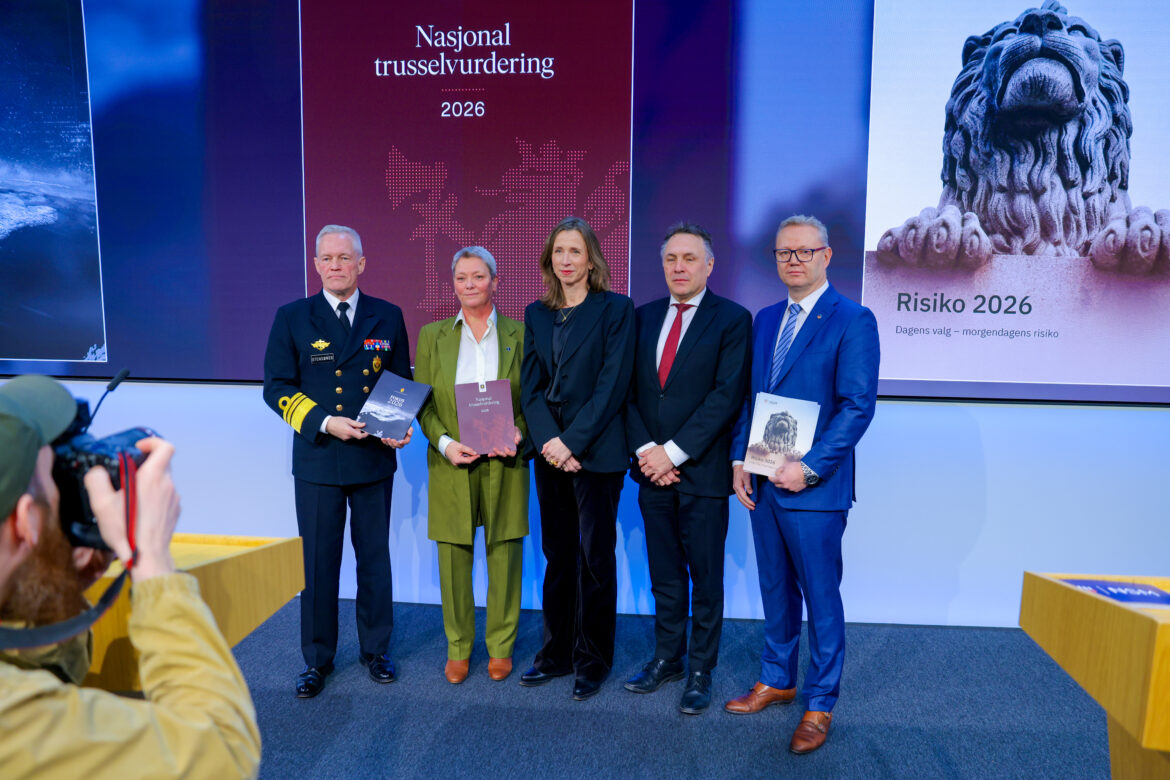 Oslo 20260206.
Sjef Etterretningstjenesten Viseadmiral Nils Andreas Stensønes, sjef for PST Beate Gangås, justis- og beredskapsminister Astri Aas-Hansen, forsvarsminister Tore O. Sandvik og direktør i NSM Arne Christian Haugstøyl på pressekonferansen om årets trusselvurderinger.
Foto: Amanda Pedersen Giske / NTB
Oslo 20260206.
Sjef Etterretningstjenesten Viseadmiral Nils Andreas Stensønes, sjef for PST Beate Gangås, justis- og beredskapsminister Astri Aas-Hansen, forsvarsminister Tore O. Sandvik og direktør i NSM Arne Christian Haugstøyl på pressekonferansen om årets trusselvurderinger.
Foto: Amanda Pedersen Giske / NTB
Background and recent developments
Norwegian asset managers must comply with the Norwegian Sanctions Act, which transposes UN and EU sanctions. Many managers also face obligations under US, UK, or other sanctions regimes due to extraterritorial application or investor requirements. Asset managers and portfolio companies must also navigate export controls and trade restrictions, including Norwegian regulations on dual-use goods and services, and US measures targeting entities deemed contrary to US national security interests. These restrictions may have extraterritorial reach and apply to US-origin goods or technology.
The intensification of US-China trade rivalry and sustained pressure on Russia has accelerated regulatory activity. Consequently, asset managers are likely to increasingly encounter situations where portfolio companies maintain relationships with customers, suppliers, or partners subject to or linked to trade or investment restrictions. This can potentially affect operations and returns on investment, if not adequately handled. The threat assessment reports published recently provides valuable information on risk scenarios that asset managers should be attentive to.
Sanctions circumvention risk
Sanctioned individuals and entities have developed sophisticated circumvention methods, including complex financial structures, misrepresentation of goods’ origin, and operations through third-country jurisdictions that exploit legitimate commercial supply chains. As stated in the threat assessment report, circumvention attempts are getting creative. To obscure the end-user, criminals often use intermediary third countries as recipients of controlled goods, and the intermediary then re-exports to, for example, Russia. The threat assessment specifically refers to examples where Russian actors subject to comprehensive sanctions obtain goods and products from Norway through Chinese intermediaries.
Whilst most Norwegian asset managers and their portfolio companies have no engagement directly with Russia and other countries subject to comprehensive sanctions, they often do have business relationships with companies in China, the UAE, Hong Kong, or other jurisdictions which are known to be used for circumvention. European intermediaries are also being used, knowingly or unknowingly, for such purposes. This illustrates how sanctions and trade restriction risks may be prevalent in less obvious business activities.
The 20th sanctions package represents a shift in how the EU tackles sanctions evasion through third countries. The European Commission has proposed to activate – for the first time – the Anti-circumvention tool. This will allow the EU to restrict the sale, supply, transfer or export of specified sanctioned goods and technology to certain third countries whose jurisdictions are considered to be at continued and particularly high risk of circumvention. The European Commission has specifically proposed to activate this tool for certain jurisdictions where there is a high risk that products are re-exported to Russia. The proposal must be endorsed by the Member States, which is expected to occur by 24 February, marking the four-year anniversary of Russia’s full-scale invasion of Ukraine.
Russia has demonstrated increased interest in Norwegian maritime technology, underwater technology, sensors, and semiconductor technology, all of which can be used for military purposes. The risks identified by the Norwegian intelligence services are therefore real and directly relevant to Norwegian private equity managers investing across a broad range of technology products and services.
In order to avoid being exploited, Norwegian asset managers should ensure that their portfolio companies are vigilant to these risks and how they may materialise in their business operations, and that enhanced scrutiny of customer relationships, end-use verification, and supply chain transparency are conducted, particularly where products or technologies have dual-use applications.
BAHR comments
For Norwegian asset managers, sanctions circumvention risk represents a convergence of compliance, operational, strategic and reputational considerations.
Failure to conduct adequate sanctions and export control due diligence may be viewed as a violation, even where a company does not directly participate in actions or omissions that violate sanctions. In this respect, asset managers and portfolio companies should consult the European Commission’s recommendations to EU companies[1] on how to shield against sanctions circumvention.
Furthermore, insights into whether a potential portfolio company has obvious vulnerabilities, such as for example heavy dependence on one Chinese supplier that risks being placed on US trade restriction lists, can be operationally and strategically valuable information.
Prior to investment, asset managers should perform adequate risk assessments and screening/due diligence of the target and its potential risks and vulnerabilities. During ownership, asset managers should ensure that portfolio companies continue to be alert to the risk of being used for sanctions circumvention. This includes being alert to the following red flags:
- Unusual transaction structures: Indirect transactions using intermediaries, shell companies, virtual assets or complex routing that lack clear economic rationale, particularly involving transit through known “circumvention hubs” (such as China, Malaysia, India, Turkey, Vietnam, Serbia or UAE).
- Suspicious corporate structures and ownership changes: Complex corporate structures involving offshore entities, recent changes in ownership, particularly around the time restrictions were imposed, or multiple companies sharing the same registered address.
- Links to sanctioned entities: Recent establishment, merger with, or connections to sanctioned entities or persons, potential control by designated persons despite ownership appearing below 50% threshold (through board positions, beneficial ownership, or management roles), asset transfers by family members or associates of sanctioned persons, multiple share transfers from sanctioned to non-sanctioned entities involving the same individuals or addresses.
Where potential risks are identified, risk-reducing measures should be implemented. This may include additional controls for high-risk goods and exports to higher-risk jurisdictions, the use of contractual safeguards regarding, for example, end use and end users, and more strategic assessments of sourcing strategies and supplier/customer relationships. Diversification should also be considered where deemed necessary.
BAHR is monitoring these developments closely and is available to discuss implications for your specific portfolio exposures and compliance programmes.
[1] European Union, 2023. European Commission Guidance for EU operators:
Implementing enhanced due diligence to shield against Russia sanctions circumvention.