
Dispute Resolution | The Nordic Marine Insurance Plan 2013 Version 2027, Modifications in light of the Heroic Idun Award
i. Identification of five key factors for distinguishing politically motivated State intervention from ordinary law enforcement.
ii. An express restriction of the Solglimt exception to war or war-like situations.
iii. Clarification that misuse of State power alone does not establish cover for politically motivated violence.
We examine what these changes mean for future war risk disputes.
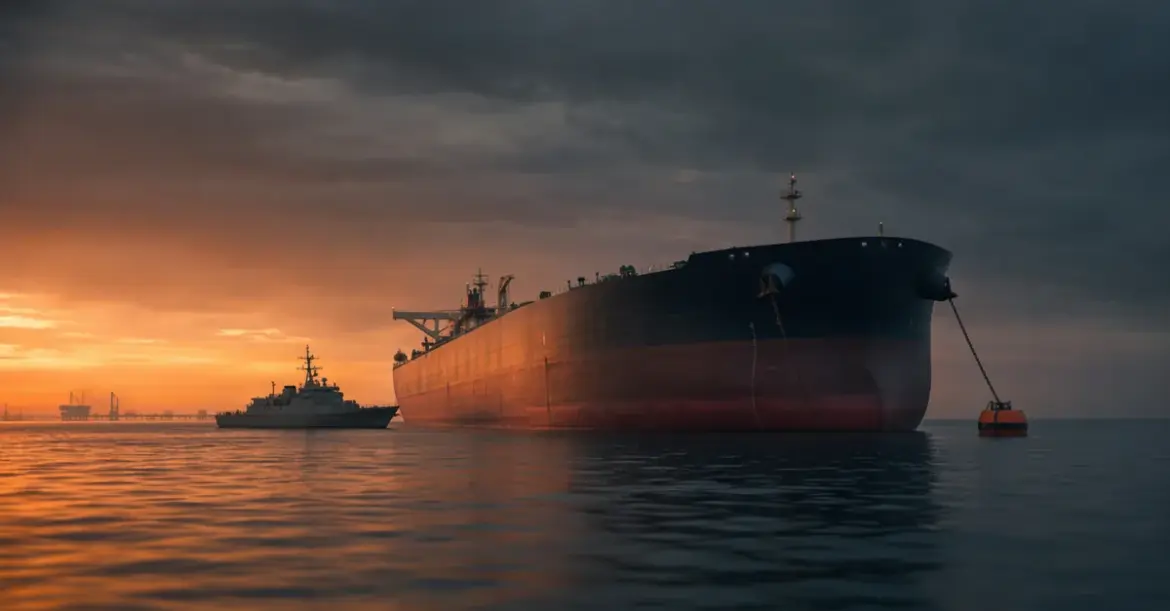
The Plan Clause 2-9(1)(b)
Clause 2-9 sets out the perils covered by an insurance against war perils. Sub-clause 1(b) covers “capture at sea, confiscation, expropriation and other similar interventions by a foreign State power, provided any such intervention is made for the furtherance of an overriding national or supranational political objective”. Sub-clause 1(b) mirrors the marine risk exception in Clause 2-8(b).
A key requirement of the provision is that the intervention must be made for the furtherance of an “overriding national or supranational political objective“. Ordinary law enforcement activity, even if unlawfully carried out by a foreign State, falls outside this cover unless the activity satisfies the requirement of political objective. The 2027 Commentary maintains that the test is whether an overriding political objective can be established, regardless of whether the intervention itself can be characterised as an abuse of power or corruption.
The Heroic Idun Award, in Brief
The Heroic Idun dispute arose out of the detention of the VLCC tanker Heroic Idun, first by Equatorial Guinea and subsequently by Nigeria, following the vessel’s decision not to comply with a Nigerian Navy order near the AKPO Offshore Terminal. The vessel and crew were held for a combined 288 days before being released under a plea agreement.
The owners of Heroic Idun brought a total loss claim of USD 180 million under Clause 2-9(1)(b) against its war risk insurer, arguing that the vessel had been captured at sea by a foreign State power for the furtherance of an overriding political objective. In the alternative, the owners argued that the crew’s (subjective) perception of a piracy threat was itself a war peril under Clause 2-9(1)(d), and that the costs of fleeing were recoverable as measures to avert or minimise loss under Clause 4-7.
The tribunal rejected all three bases of the claim. On the central issue, it found that neither Equatorial Guinea’s nor Nigeria’s conduct satisfied the requirement of political objective. Both interventions were, in substance, ordinary law enforcement. The tribunal also declined to extend the so-called Solglimt exception – a narrow carve-out for excusable misjudgements by the crew in the face of an imminent war-like threat – to the owner’s alternative claim under Clause 2-9(1)(d). Therefore, the costs of avoiding a perceived but non-existent peril were not recoverable under Clause 4-7.
The tribunal itself observed, on a prima facie basis, that aspects of Equatorial Guinea’s conduct appeared to breach international law. A Special Chamber of the International Tribunal for the Law of the Sea (ITLOS) has since, in a judgment of 27 May 2026, found Equatorial Guinea’s interception and detention of the vessel to be in breach of the United Nations Convention on the Law of the Sea (UNCLOS). The arbitral tribunal’s own analysis makes clear, however, that a finding of unlawfulness under public international law does not, by itself, convert ordinary law enforcement into a covered war peril; the motive remained decisive under the Plan.
Changes in the Commentary in Light of the Heroic Idun Award
The 2027 Commentary does not confine itself to citing the Heroic Idun as a further precedent under sub-clause 1(b) but derives five key factors for determining whether a case satisfies the political objective-requirement. The 2027 Commentary further relies on the award when explaining Clause 2-9(1)(a) and (c).
Five Key Factors Under Clause 2-9(1)(b)
The clearest and most consequential change sits in the Commentary to sub-clause 1(b). The 2023 Commentary summarised the political objective-requirement solely by reference to the award in the Sira case of 27 October 2016, which described such interventions as “typical for war or times of international crisis, and often can be explained by foreign policy considerations”. From this, the 2023 Commentary drew the further conclusion that abuse of power is neither necessary nor sufficient for cover.
The 2027 Commentary cites the Heroic Idun award when listing five non-exhaustive factors to guide this overall assessment:
- Whether the general domestic and foreign political situation may explain the detention, with the specific vessel playing a lesser role, where the intervention is instrumental to a broader objective such as a boycott or retaliation against the flag State or the State of origin of the cargo;
- Whether the intervention stems from an unfounded suspicion that the vessel threatened the State’s security interests, for example through suspected espionage or support for saboteurs or political opponents;
- Whether the intervention exceeds what is necessary for law enforcement, whether in duration or through the use of violence against master or crew;
- Whether the intervention was initiated or joined by government or another overarching authority and cannot reasonably be explained as legitimate customs, police, safety or navigation enforcement, or enforcement of private law rights, given how such decisions are normally taken in the State concerned; and
- Circumstances of war and crisis, broadly understood, may generally support a finding of an overriding political objective and ease the evidentiary burden of showing the intervention is attributable to such an objective rather than to law enforcement.
A Narrowed Solglimt Exception Under Clause 2-9(1)(a)
Clause 2-9(1)(a) covers “war or war-like conditions“. The Commentary to this sub-clause goes further, addressing faults or negligence by master or crew that are closely tied to that peril – including, as a conceivable exception, cases where the crew leaves the vessel under a mistaken belief that war is imminent. As its example, the 2023 Commentary cited the Solglimt case (Rt-1921-424), in which the crew abandoned the vessel in the mistaken belief that it had been torpedoed.
The owners of the Heroic Idun relied on Solglimt to argue, by analogy, that the crew’s perceived piracy threat was itself an independent war peril under the separate head of Clause 2-9(1)(d). The tribunal rejected the analogy. It found it problematic that the Commentary had invoked Solglimt in support of a proposition that, on closer reading, contradicts the actual outcome of that case. As a result, it set out two cumulative conditions for the exception to apply: good faith on the part of the master and circumstances so urgent that the crew had no reasonable opportunity to assess the situation before acting. Applying those conditions, the tribunal found that neither condition was met on the facts. The 2027 Commentary now codifies this limitation directly, adding, in the same sentence as the Solglimt reference, that the exception “is limited to letter (a) type of situations”, with an express cross-reference to the Heroic Idun award.
A New Cross-Reference on Misuse of Power Under Clause 2-9(1)(c)
The Commentary to sub-clause 1(c), which covers social, religious or politically motivated violence, now adds that the provision’s wording “includes individuals misusing state power”, but clarifies that “misuse of power is not in itself sufficient to be covered by this provision”. Whether conduct amounts to a misuse of power or is considered ordinary law enforcement is assessed “not […] by applying an objective rule of law yardstick but based on what could be expected in the relevant legal system”, citing the Heroic Idun award explicitly.
This echoes the fourth out of the five factors set out in the Commentary to sub-clause 1(b): whether an intervention can reasonably be explained as legitimate enforcement is judged by reference to how such decisions are normally taken in the specific State.
The Conclusions the Commentary Draws, and the Clarification It Offers
These amendments confirm the high bar the Heroic Idun award sets for recovery under Clause 2-9(1)(b), adopting the tribunal’s own framework as the operative guidance for future cases. For war risk insurers, the revised Commentary offers a clearer basis for resisting claims grounded in ordinary, if overzealous, law enforcement activity by foreign States. For shipowners and their insurers alike, the five-point test offers more predictability than the previous versions of the Plan. However, the amendments do not alleviate the shipowner’s burden to prove the foreign State’s true motive, which in practice is still very difficult to discharge.
The narrowing of the Solglimt exception is, if anything, the more significant practical signal for future war risk disputes involving piracy. Shipowners cannot invoke the exception to bring merely perceived threats within cover under sub-clause 1(d).